🏡 Limited time: Up to 8 Weeks FREE on select homesView Available Units

Open House every Thursday, 3PM – 5PM

Exclusive Offer: 6 Weeks FREE Rent On Select Units! Schedule a Tour Now →


Renting in Seattle With a Dog vs a Cat: What Actually Changes

Renting in Seattle With a Dog vs a Cat: What Actually Changes

TL;DR: Most pet friendly apartment advice treats dogs and cats as one category. They are not. A dog makes location the deciding factor, because you are leaving the building four times a day in Seattle weather. A cat makes the unit itself the deciding factor, because the animal never leaves it. Same city, same fees, completely different search. Contour in Interbay works for both: flat streets outside for a dog, floor-to-ceiling windows inside for a cat.

Key takeaways

  • With a dog, prioritize what is within a five-minute walk. With a cat, prioritize window light, vertical space and quiet.
  • Seattle requires dogs to be leashed in all city parks except inside a designated off-leash area, and there are 15 of those citywide.
  • Ground-floor or near-elevator units matter enormously for a dog and barely at all for a cat, which flips which floor plans you should be touring.
  • Both cats and dogs must be licensed under Seattle Municipal Code, something most renters relocating here do not realize.
  • Contour is pet friendly across all 117 homes, with flat streets outside for dogs and floor-to-ceiling windows for cats.

A building’s pet policy usually treats a dog and a cat identically. Same fee, same addendum, often the same weight language. That symmetry is misleading, because what you need from an apartment diverges almost completely once you move in.

A dog turns your apartment into a base you leave from. You will exit that building in the dark, in the rain, several times a day, every day of the lease. Everything about that trip matters: which floor, how far to the door, what is on the other side of it, how steep the sidewalk is.

A cat turns your apartment into the entire world. The animal will likely never leave it. Nothing outside the front door matters. What matters is square footage used well, window ledges, sunlight, somewhere to climb and somewhere to hide from the vacuum.

Those are close to opposite priorities, and searching for one while thinking about the other is how renters end up somewhere that technically allows their pet and practically does not suit it.

With a dog you are renting a neighborhood. With a cat you are renting a room. The lease looks the same either way.

Renting With a Dog: Location Decides It

Everything about renting with a dog comes back to the walk. Not the weekend hike, the ordinary weekday one that happens whether or not you feel like it.

Start With the Off-Leash Map

Seattle Parks and Recreation is clear that dogs must be leashed in city parks unless they are inside a designated off-leash area, and the city maintains 15 of them. This is the detail that reshapes a search, because proximity to a large park is not the same as proximity to somewhere your dog can actually run.

Discovery Park is the obvious example. It is the largest park near Interbay at 1.4 miles away, it has miles of forest and bluff trails, and it is leash-only with dogs prohibited on the beaches. A superb leashed hike, not an off-leash run. The nearest genuine off-leash areas are Magnolia Manor Park on the bluff, Kinnear Park on Queen Anne and Golden Gardens in Ballard, which has a one-acre wood-chipped area with benches and a covered section for rain. The city’s list of dog off-leash areas is worth checking against any neighborhood you are considering.

The Building Details That Matter for a Dog

  • Floor and exit distance. A ground-floor unit or one near the elevator changes the daily walk meaningfully, especially for a puppy or an older dog.
  • Flooring. Hard surfaces beat carpet in a rainy city by a wide margin. Luxury vinyl plank is the practical standard.
  • In-unit laundry. Washing a muddy dog bed in a shared basement machine gets old in about two weeks.
  • Street gradient. Seattle’s hills are real. Flat neighborhoods are easier every single day.
  • Transit access. Leashed dogs are allowed on King County Metro buses, which turns a distant off-leash area into a realistic trip without a car. Check current Metro rules before your first ride.

Renting With a Cat: The Unit Decides It

Cat owners get a much easier search on paper. No walks, no off-leash geography, no 6am rain. What they get instead is a set of requirements that listings almost never describe.

Light, Height and Hiding Places

An indoor cat spends its entire life in the space you rent, and the three things that determine whether that life is decent are sunlight, vertical space and somewhere to retreat.

  • Window light and ledges. Floor-to-ceiling windows are a genuine feature for a cat, not a marketing line. A sunny ledge is the single most used piece of furniture in most cat households.
  • Vertical space. Cats use height to feel safe. Ceiling height and somewhere a tree or shelf can go matters more than floor area.
  • A door that closes. A separate bedroom gives a cat somewhere to be when there are guests, which a studio does not. This is a real argument for a one-bedroom over a studio.
  • Somewhere for a litter box that is not the kitchen. Bathroom layout and storage nooks decide this, and it is worth checking on a tour.
  • Balcony safety. Check railing gaps and whether a balcony can be made secure, since falls from height are a common urban cat injury.

Noise and Neighbors Cut the Other Way

Cats rarely generate noise complaints, which removes the biggest source of friction dog owners deal with. But cats are more affected by noise than they are a source of it. A unit facing a busy arterial or directly above a shared amenity space is harder on a cat than on a dog that is out of the apartment half the day.

What to Compare, Depending on Your Animal
Factor Dog Cat
What decides the choice Neighborhood and walk access The unit itself
Ideal floor Ground floor or near elevator Higher floors, quieter and better light
Most valuable feature Flat streets and a nearby off-leash area Floor-to-ceiling windows and a door that closes
Flooring Hard surface, essential in a wet climate Less critical, though easier for hairballs
Main neighbor risk Barking while you are at work Rare, mostly early-morning activity
Studio viable? Often yes, the dog is out frequently Harder, no separate space to retreat to

What Applies to Both

Some things do not change with species, and they are the ones renters most often miss.

Licensing. Seattle Municipal Code requires all cats and dogs to be licensed, indoor cats included. This surprises nearly every renter moving from out of state. It runs through the Seattle Animal Shelter and generally requires proof of current rabies vaccination.

Fees. Most buildings charge the same pet rent for a cat as for a 60 pound dog, which is worth noting when you are pricing options. Whether that charge is per animal or per household matters more than the headline figure. We work through the arithmetic in our guide to pet rent, fees and deposits.

The addendum. Breed and weight language is written for dogs but the document binds both. Cat owners sometimes skim it for that reason and miss the pet count limit or the visiting animal clause. What to look for is covered in our guide to reading the lease before you sign.

Assisted animals. Service animals and emotional support animals are not pets under fair housing law and cannot be charged pet rent or fees, regardless of species.

Dogs, Cats and Daily Life at Contour

Contour is a 117-home community at 3036 16th Ave W, pet friendly throughout rather than in a subset of units. Pet terms including any breed or weight guidelines are confirmed at the time of application.

What makes it work for a dog is mostly outside the building. Interbay’s streets are flat, which is not true of Queen Anne or Magnolia above it, and three off-leash areas are within reach. The D Line stops at the door, so Ballard and Golden Gardens are reachable without a car.

What makes it work for a cat is inside. The homes have floor-to-ceiling windows, which is the feature cats use most, and one-bedroom layouts reaching 809 square feet give an animal a door to be behind when there are guests. Studios start at 480 square feet and two-bedroom layouts are also available.

  • Luxury vinyl plank flooring through the living areas, easier for both species than carpet.
  • Full-size in-unit laundry in every home.
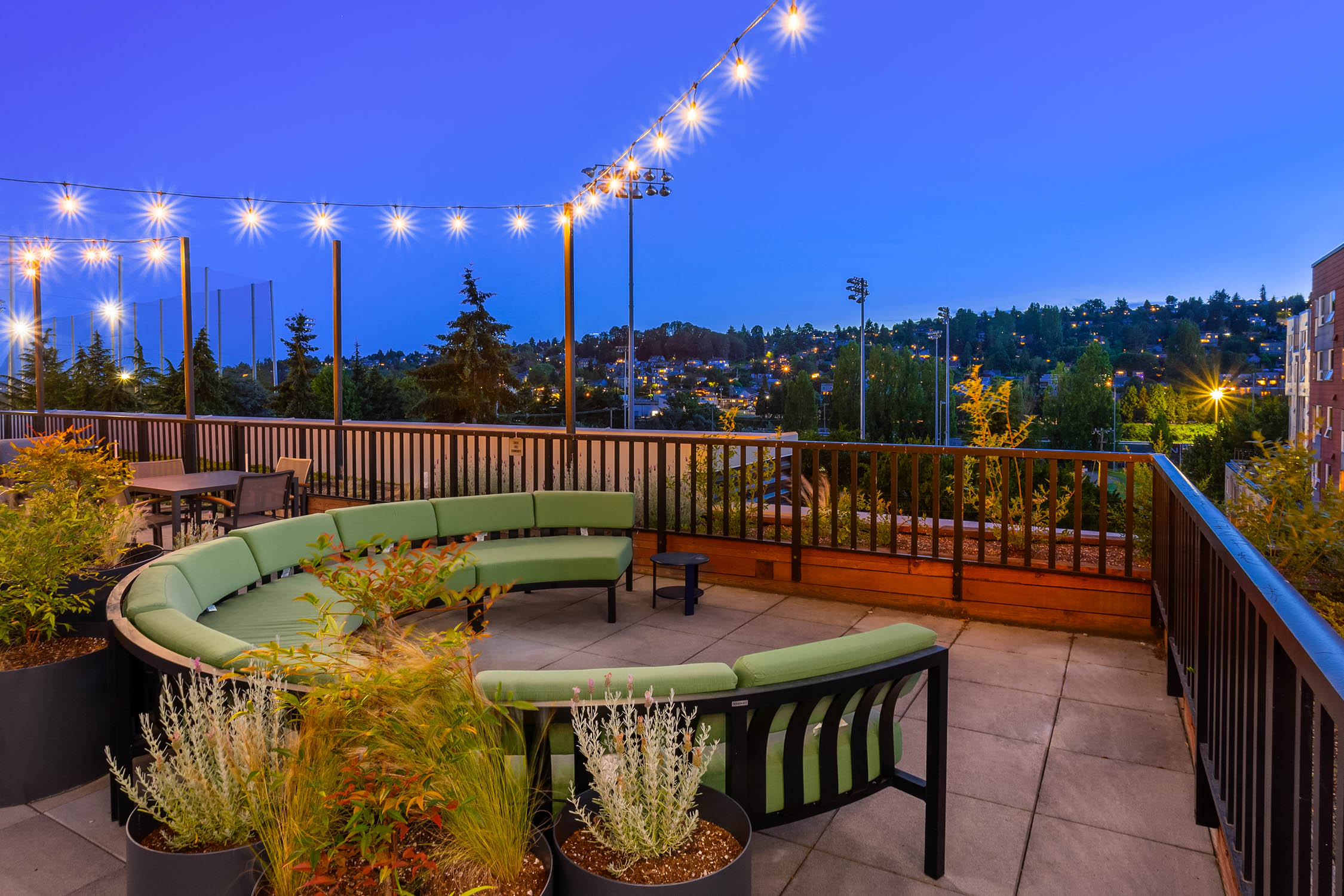
  • Rooftop deck with Olympic Mountains and Puget Sound views, plus a BBQ and fire pit.
  • Controlled access garage for vet trips, which matters more for cats than people expect.
  • Co-working lounge so a remote work day does not mean leaving an animal alone for a full commute.

If you are still weighing layouts, our guide to choosing a floor plan with a pet goes deeper on unit position, light and space.

Frequently Asked Questions

Is it easier to rent with a cat or a dog in Seattle?

Cats are generally easier to place, since they raise fewer noise concerns and are unaffected by breed and weight language written for dogs. Dogs face more restrictions but have more neighborhood options, because Seattle has 15 designated off-leash areas and extensive leashed trail access.

Do indoor cats need a license in Seattle?

Yes. Seattle Municipal Code requires all cats and dogs to be licensed regardless of whether the animal goes outdoors. Licensing is handled by the Seattle Animal Shelter and typically requires proof of current rabies vaccination.

Can dogs be off leash in Discovery Park?

No. Discovery Park is leash-only and dogs are not permitted on its beaches. The nearest designated off-leash areas to Interbay are Magnolia Manor Park, Kinnear Park on Queen Anne and Golden Gardens in Ballard.

Is a studio apartment enough space for a cat?

It can be, but a one-bedroom is generally easier because it gives the cat somewhere to retreat when there are guests or noise. Vertical space and window light matter more than total square footage, so a well-laid-out studio with good light can outperform a larger dark unit.

Do apartments charge more pet rent for dogs than cats?

Most Seattle buildings charge the same pet rent regardless of species, though breed and weight restrictions apply in practice only to dogs. What varies more is whether the charge is per animal or per household.

Are all apartments at Contour pet friendly?

Yes. Contour is pet friendly throughout all 117 homes rather than in a limited set of units, so there is no pet-only floor or restricted section. Pet terms are confirmed at the time of application. Call (206) 650-7565 for details specific to your animal.

Search for the Animal You Actually Have

The mistake is searching generically for a pet friendly apartment and sorting out the details later. If you have a dog, filter by neighborhood first and let the unit be whatever fits inside a good location. If you have a cat, do the reverse: find the unit with the light and the layout, because the neighborhood barely enters into it.

Contour happens to cover both, with flat streets and off-leash access outside and floor-to-ceiling windows inside. See which side matters to you: stop by the Open House every Thursday from 3PM to 5PM, browse available apartments, or call the leasing team at (206) 650-7565 about current move-in offers.

Explore Contour: Availability · Floor Plans · Amenities · Gallery · Neighborhood · Virtual Tours

Schedule a visit

Come see it in person.

Check what is open right now, walk a layout on a virtual tour, or book a time with the leasing team at (206) 650-7565.

View available apartments

Scroll to Top
Contour Apartments at Interbay seal with the building coordinates

Contact Contour at Interbay

Please complete the information below, and we will contact you right away!