🏡 Limited time: Up to 8 Weeks FREE on select homesView Available Units

Open House every Thursday, 3PM – 5PM

Exclusive Offer: 6 Weeks FREE Rent On Select Units! Schedule a Tour Now →


Seattle Neighborhoods for Renters: How to Choose Where to Live

Seattle Neighborhoods for Renters: How to Choose Where to Live

TL;DR: Seattle neighborhoods differ on four things that actually change daily life: terrain, transit, street life and green space. Almost every area is strong on two and weak on the others, and the useful exercise is deciding which two you cannot live without. This is a comparison of the main rental areas on exactly those terms. Contour in Interbay is the worked example: strong on terrain and transit, and honest about its thin street life.

Key takeaways

  • Terrain is a genuine factor in Seattle in a way it is not in flatter cities, and it shapes whether you walk or drive for short trips.
  • Street life and quiet are a direct trade, and nearly every neighborhood sits clearly on one side of it.
  • Transit quality varies block to block, so check the actual route from an address rather than the neighborhood’s reputation.
  • The neighborhoods with the best value tend to be the ones adjacent to the popular ones rather than the popular ones themselves.
  • Contour in Interbay scores strongly on terrain and transit and openly weakly on street life, which is the kind of trade to make deliberately.

The Four Factors That Matter

Neighborhood guides usually sort by vibe, which is not actionable. These four are, because they are stable properties of a place rather than impressions of it.

  • Terrain. Seattle is built on hills, and the difference between a flat neighborhood and a steep one shows up every day in whether you walk, cycle or drive for a short trip. It matters more with a dog, a bike, a stroller or a bad knee.
  • Transit. Frequency and directness, not just presence. A neighborhood with a frequent bus straight downtown beats one technically closer that requires a transfer.
  • Street life. How much is within walking distance in the evening. This is the factor people weight most when choosing and most often overestimate how much they will use.
  • Green space. Parks, water access and trails, and crucially how you reach them. Seattle is generous here but distribution is uneven.

Almost no Seattle neighborhood is strong on all four. Deciding which two are non-negotiable does more to narrow a search than any budget filter.

Every Seattle neighborhood trades something. The question is only which trade you will stop noticing.

One address to hold in mind while you weigh the four. Contour sits at 3036 16th Ave W in Interbay, which scores strongly on terrain and transit, well on green space with Discovery Park 1.4 miles away, and openly weakly on street life. That shape, two strong and one deliberately accepted weakness, is the pattern worth looking for wherever you land.

The Urban Core

Downtown, Belltown and South Lake Union. You are paying for proximity to offices and for not needing a car.

Strong on: transit, which is denser here than anywhere else in the state, and street life, with most things reachable on foot. South Lake Union in particular puts you next to the largest concentration of tech employment in the city.

Weak on: green space, where parks are a trip rather than a walk, and quiet. Street noise, sirens and nightlife are constant in parts of Belltown. Terrain is mixed, with the downtown grade steeper than it appears on a map.

Suits: people who work downtown, do not own a car, and want the shortest possible commute. It suits anyone with a dog or a strong need for outdoor access considerably less.

The Activity Neighborhoods

Ballard, Fremont and Capitol Hill. These are the neighborhoods people name when they picture living in Seattle.

Strong on: street life, decisively. Ballard has the restaurant and brewery concentration plus a farmers market and Golden Gardens for beach and off-leash access. Fremont has a similar density at a slightly smaller scale. Capitol Hill has the most nightlife in the city and excellent transit.

Weak on: quiet and parking, both of which are genuinely difficult in all three. Cost has risen with demand, so you are paying a neighborhood premium on top of whatever the building costs.

Suits: people who will actually use it several nights a week. If your honest pattern is staying in on weeknights, you are paying a premium for optionality you will not exercise.

The Established Residential Hills

Queen Anne and Magnolia. Older, quieter, with the best views in the city and a settled residential character.

Strong on: green space and quiet. Magnolia has Discovery Park, over 500 acres of forest, meadow and bluff, effectively as a neighborhood park. Queen Anne has the views and a walkable commercial spine along the avenue.

Weak on: terrain, emphatically. Both are hills and both are steep, which changes how you move around daily. Magnolia is also the most transit-constrained of the neighborhoods listed here, being somewhat cut off by geography.

Suits: people who prioritize quiet and space, are comfortable driving, and value proximity to a large park over proximity to restaurants.

The Connector Neighborhoods

Interbay is the clearest example: the flat corridor running between Queen Anne and Magnolia, north toward Ballard.

Strong on: terrain, being genuinely flat in a way its neighbors are not, and transit, with the D Line running directly through it to downtown and Ballard. Green space is good, with Discovery Park 1.4 miles away and the Ship Canal and Ballard Locks walkable. Newer construction is more available here than in the established neighborhoods.

Weak on: street life, clearly. There is less to walk to in the evening than in any of the neighborhoods bordering it, and part of the area is a working industrial and rail corridor.

Suits: people who want newer buildings and good transit without paying an adjacent neighborhood’s premium, and who are content to travel a short distance for dinner. Our fuller case is in why Interbay is Seattle’s best-value neighborhood for a newer apartment.

Comparing Seattle Rental Areas on What Matters
Area Terrain Transit Street life Green space
Downtown / Belltown Moderate to steep Best in the city High, and noisy Limited, parks are a trip
South Lake Union Mostly flat Strong Moderate, weekday oriented Lake access, limited parks
Ballard Mostly flat Good, busy The highest Golden Gardens, waterfront
Capitol Hill Hilly Excellent, light rail Very high Volunteer Park
Queen Anne Steep Good, hill access issues Moderate, on the avenue Smaller parks, strong views
Magnolia Steep The most limited Low Discovery Park
Interbay Flat D Line direct Low Discovery Park 1.4 mi, Ship Canal

How to Actually Decide

Three exercises that resolve this faster than more reading.

1. Rank the Four Factors Honestly

Not aspirationally. If you have gone out on a weeknight twice in the last three months, street life is not your top factor regardless of how you feel about the idea of it. If you own a dog, terrain and green space move to the top whether you like it or not.

2. Test the Actual Commute

Not the neighborhood’s reputation for transit, the specific route from a specific address at the hour you would travel. A frequent direct bus beats a nominally closer neighborhood needing a transfer, every time. Our commute-first guide to Seattle renting works through this.

3. Visit on a Wet Weekday Evening

This is the single most useful thing on the list. Seattle neighborhoods look similar on a dry Saturday afternoon and differ enormously on a dark wet Tuesday in February, which is a much more representative sample of the year. Walk from a prospective address to the nearest shop, the nearest park and the bus stop, in the rain, after dark. You will learn more in forty minutes than from any amount of research.

A Worked Example

Say your top two factors are terrain and transit, because you cycle and commute downtown, and your bottom factor is street life because you cook most nights. That combination points away from Queen Anne and Capitol Hill on terrain, away from Magnolia on transit, and away from paying Ballard’s premium for something you would not use.

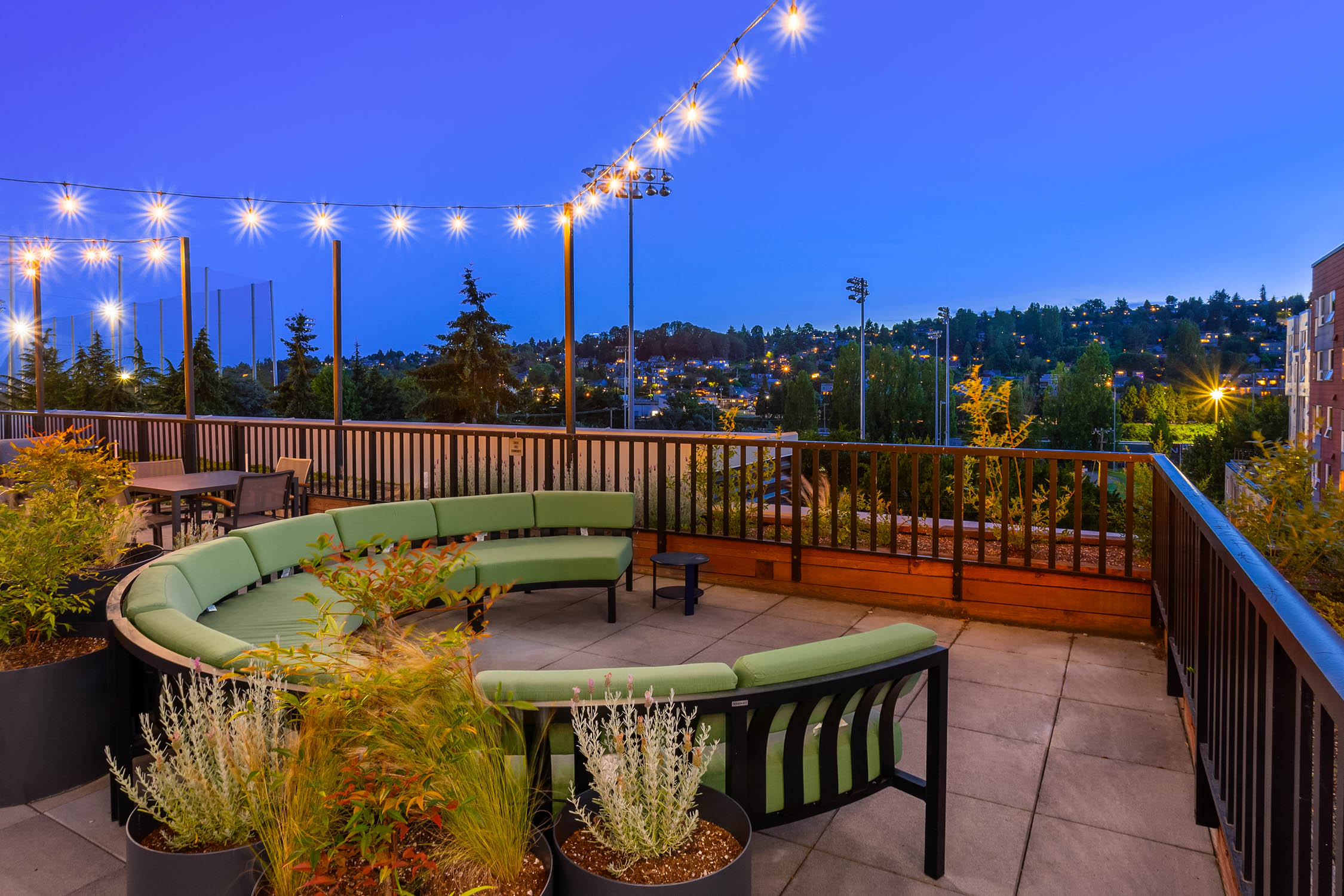
It points toward the flat, well-connected middle. Contour sits in exactly that position at 3036 16th Ave W: flat streets, the D Line at the door, Expedia 0.7 miles away, Discovery Park 1.4 miles, with a 24-hour fitness center, co-working lounge, rooftop deck, controlled access garage and bike storage with a repair station. Studios start at 480 square feet and one-bedrooms reach 809 square feet, with two-bedroom layouts available.

Frequently Asked Questions

What is the best neighborhood to rent in Seattle?

There is no single answer, because Seattle neighborhoods trade terrain, transit, street life and green space against each other. Rank those four by what you actually do weekly and the shortlist usually resolves to two or three areas.

Which Seattle neighborhoods are flat?

Interbay, Ballard and South Lake Union are largely flat. Queen Anne, Magnolia and Capitol Hill are hilly, and the grade is steep enough to affect walking and cycling meaningfully.

What is the difference between renting in Interbay and downtown Seattle?

Downtown buys walkability to offices and nightlife at the highest cost and noise level, with parks as a trip rather than a walk. Interbay buys newer construction, flat streets, direct D Line service and close outdoor access at a lower neighborhood premium, with notably less to walk to in the evening.

Is Ballard or Queen Anne better for renters?

Ballard has more street life, beach access and mostly flat terrain, but is busier with harder parking. Queen Anne is quieter with better views and a walkable avenue, but is steep. The choice usually comes down to terrain tolerance and how often you go out.

How do I evaluate a Seattle neighborhood before renting?

Visit on a wet weekday evening rather than a sunny weekend, and walk from a prospective address to the nearest shop, park and transit stop. That single visit tells you more about the year ahead than any online research.

Which Seattle neighborhood has the best transit?

Downtown and Capitol Hill have the densest service, including light rail. For a specific commute though, directness matters more than density, so check the actual route from the address rather than relying on the neighborhood’s reputation.

Choose the Trade, Not the Neighborhood

Every area in this city is strong on some of terrain, transit, street life and green space, and weak on the rest. Renters who are happy a year in are usually the ones who worked out which two they genuinely needed and accepted the other two would be compromises. Renters who are unhappy usually picked on reputation and discovered the trade afterwards.

If flat streets and direct transit are your two, Interbay is worth an evening walk. Stop by the Open House every Thursday from 3PM to 5PM, browse available apartments, or call the leasing team at (206) 650-7565.

Explore Contour: Availability · Floor Plans · Amenities · Gallery · Neighborhood · Virtual Tours

Schedule a visit

Come see it in person.

Check what is open right now, walk a layout on a virtual tour, or book a time with the leasing team at (206) 650-7565.

View available apartments

Scroll to Top
Contour Apartments at Interbay seal with the building coordinates

Contact Contour at Interbay

Please complete the information below, and we will contact you right away!